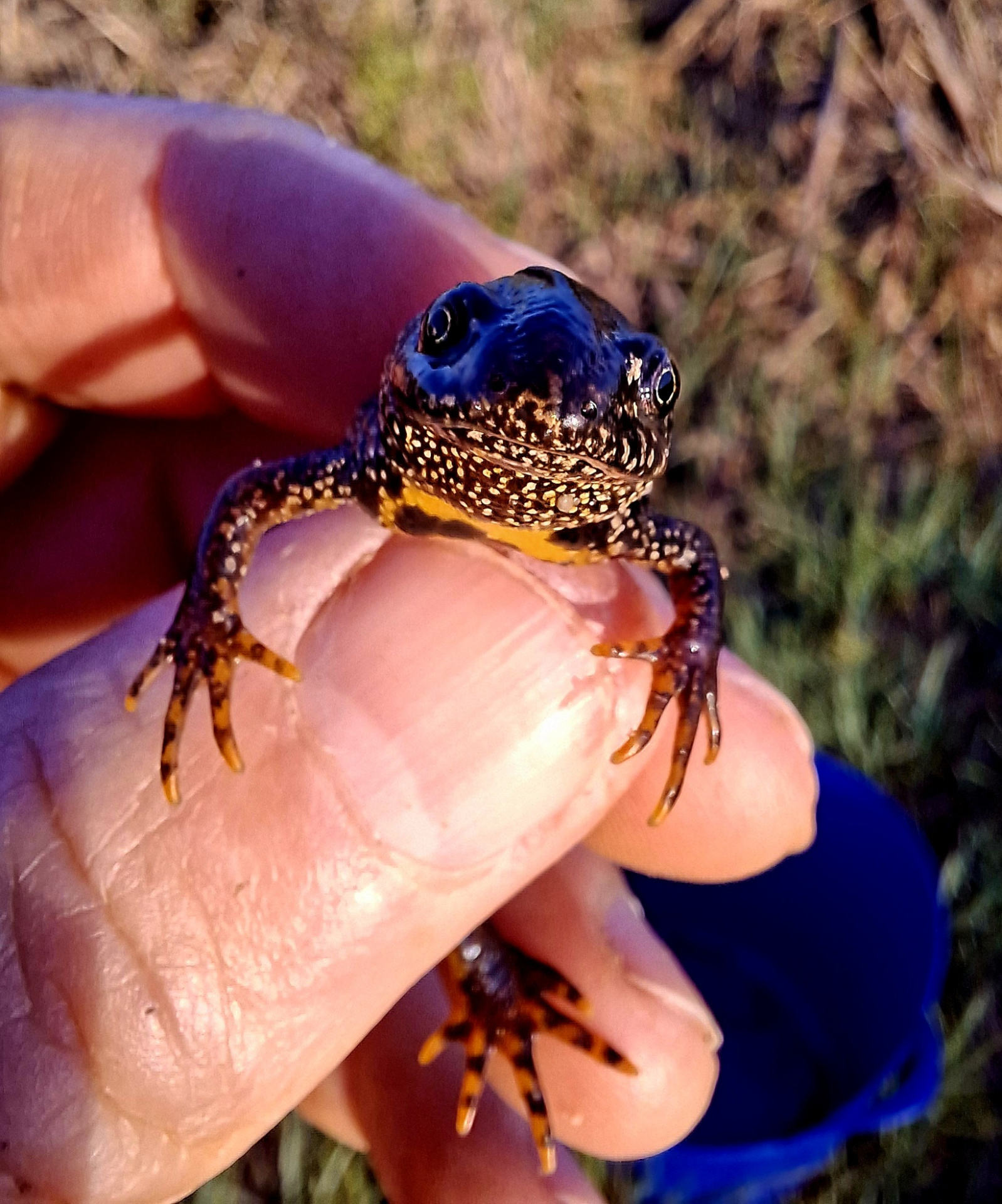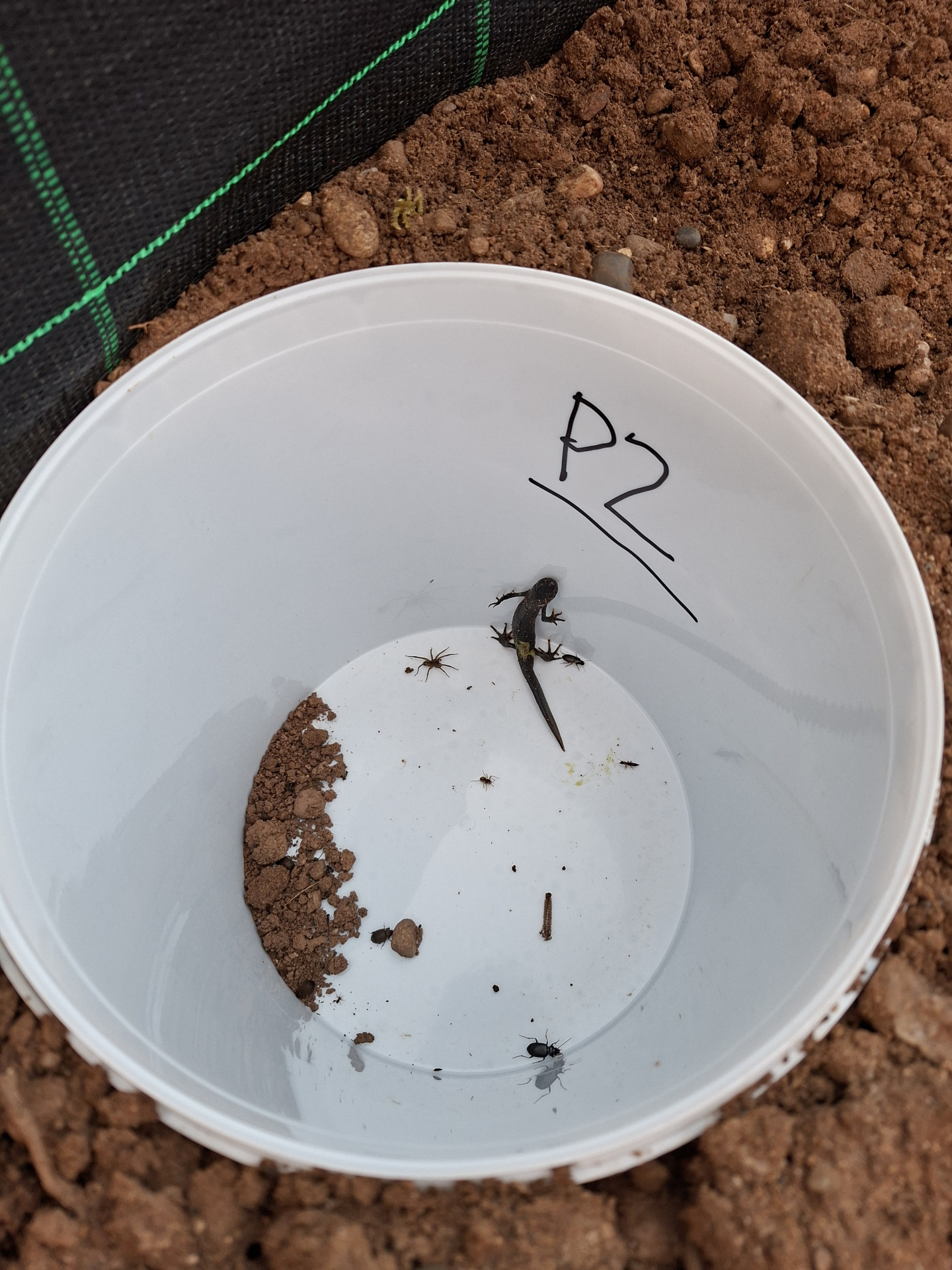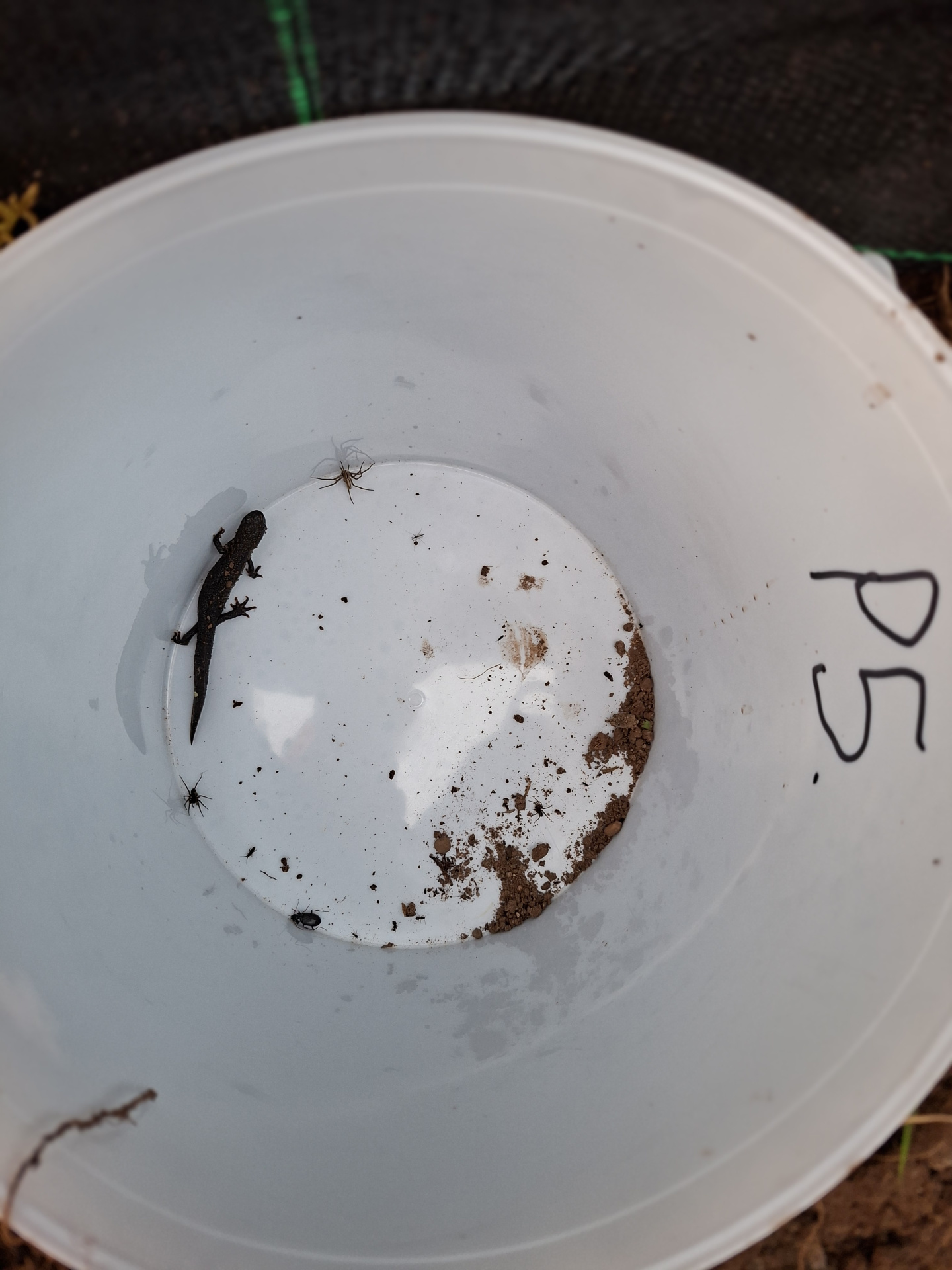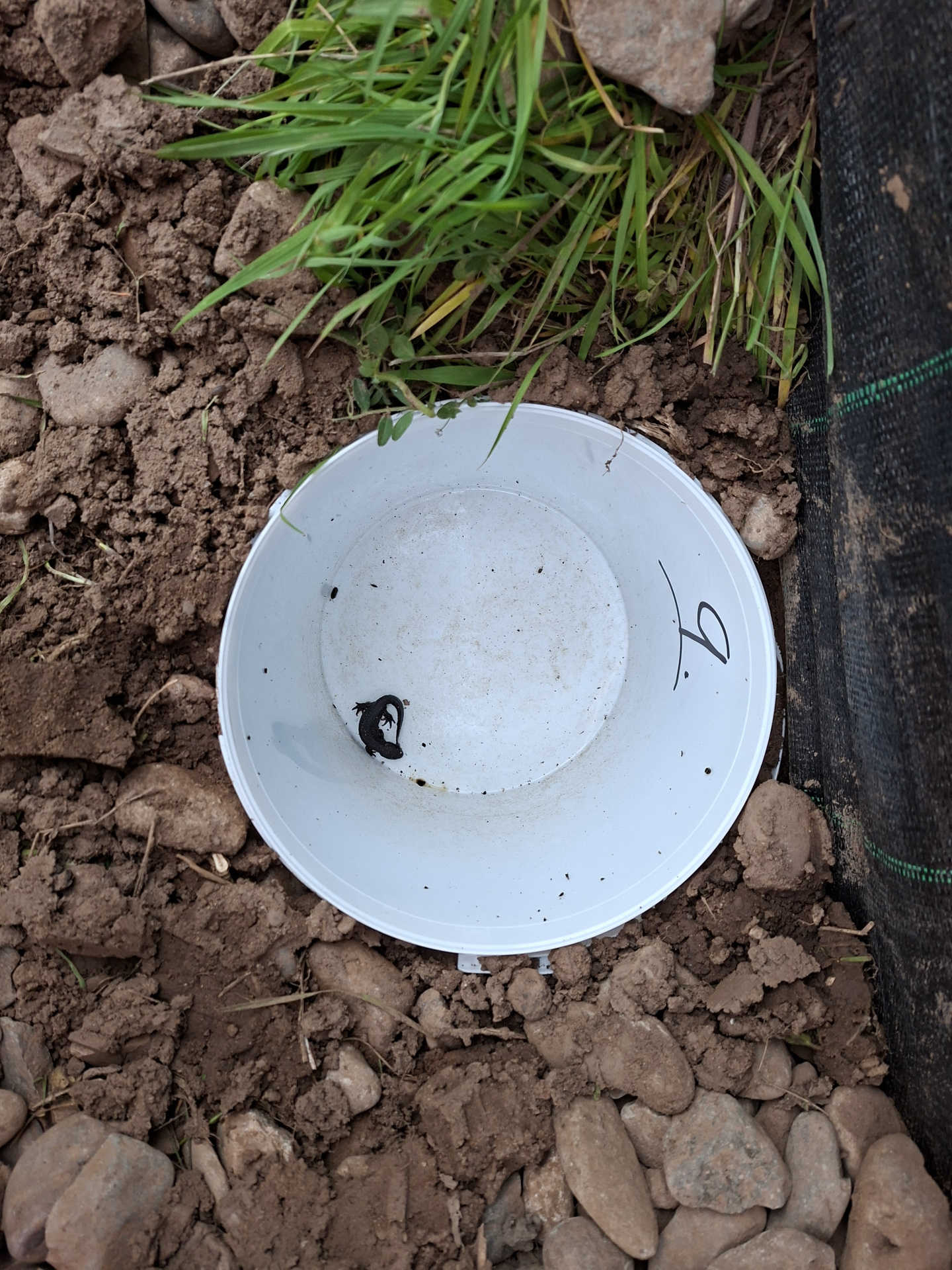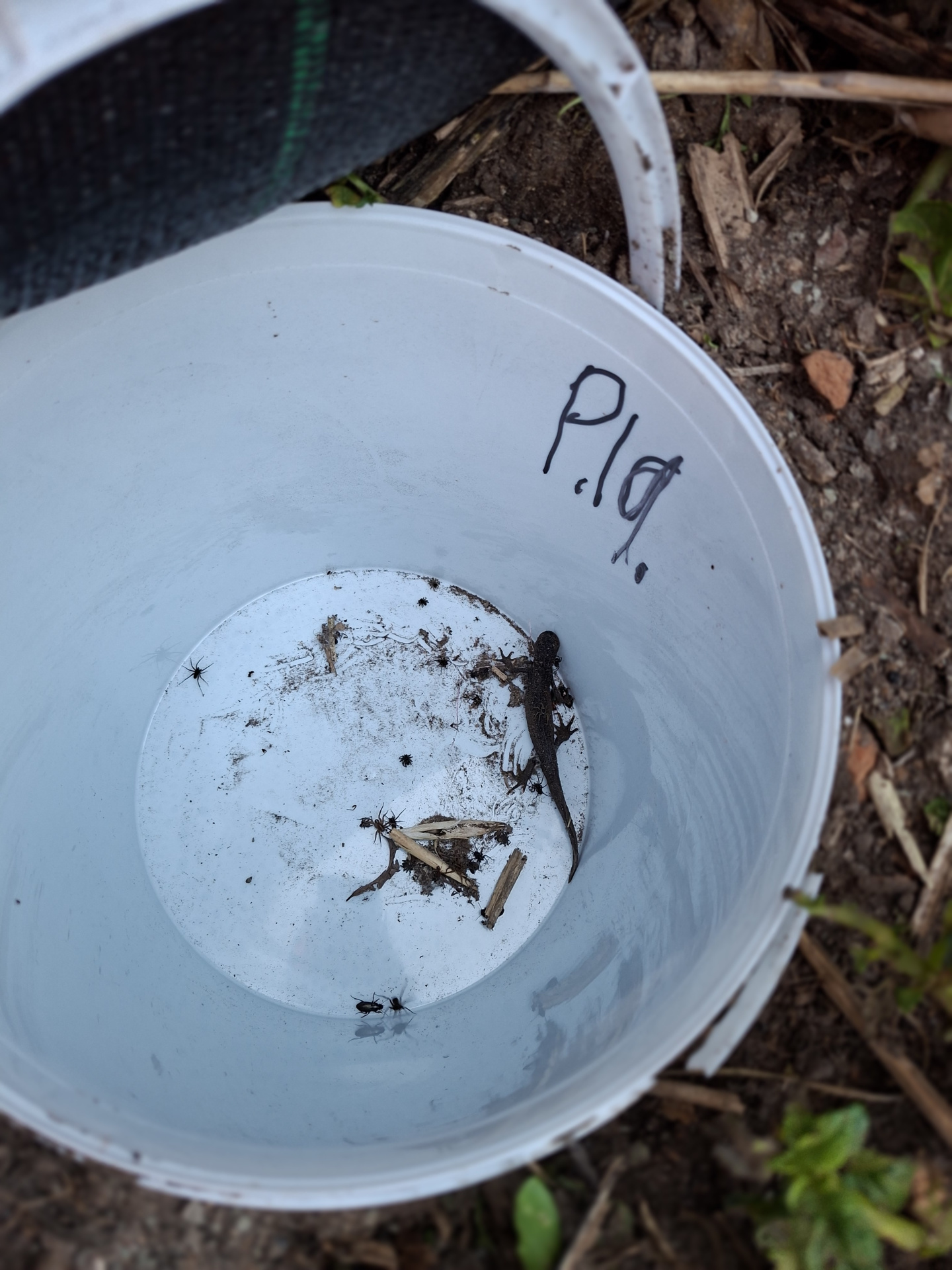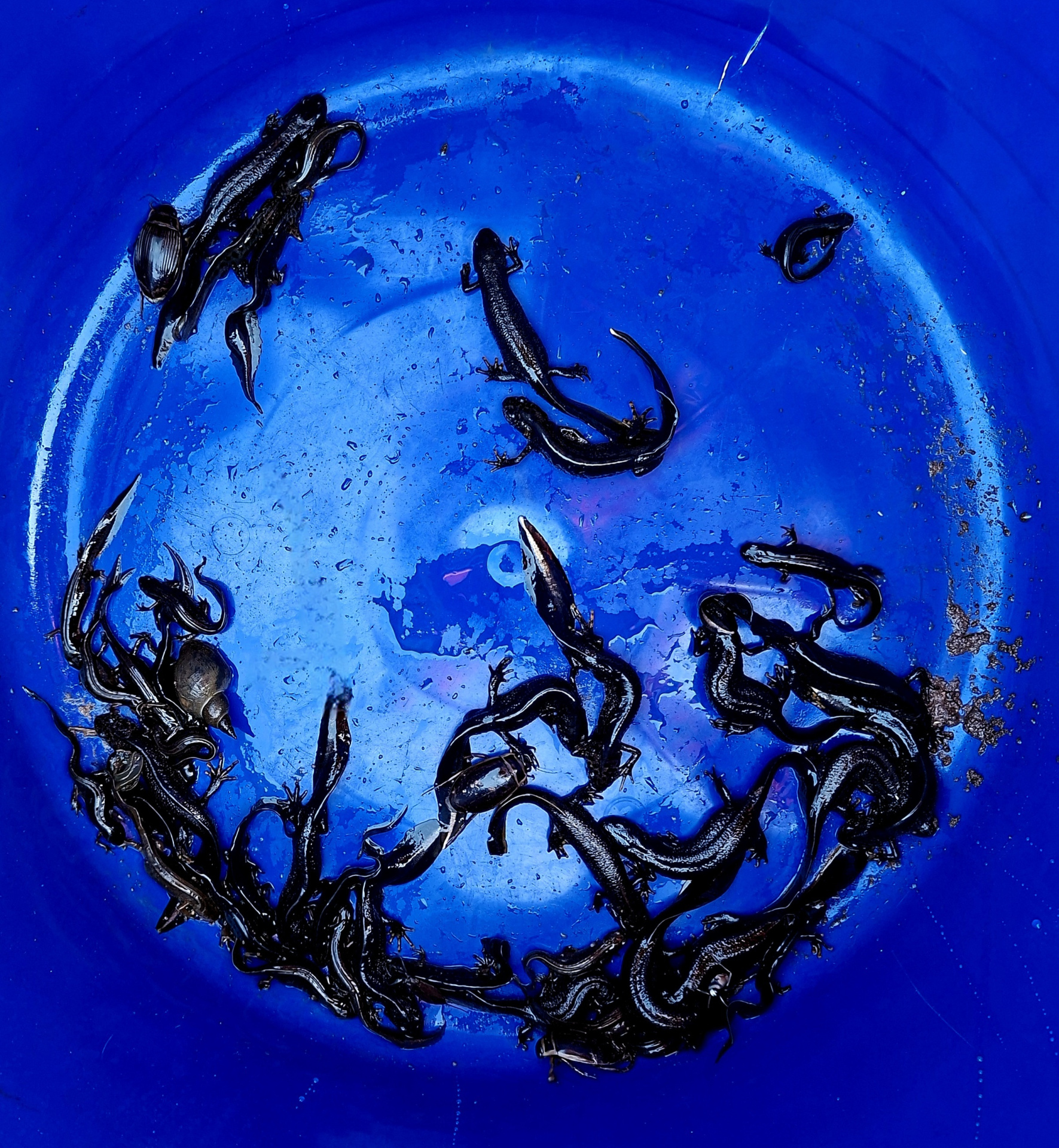
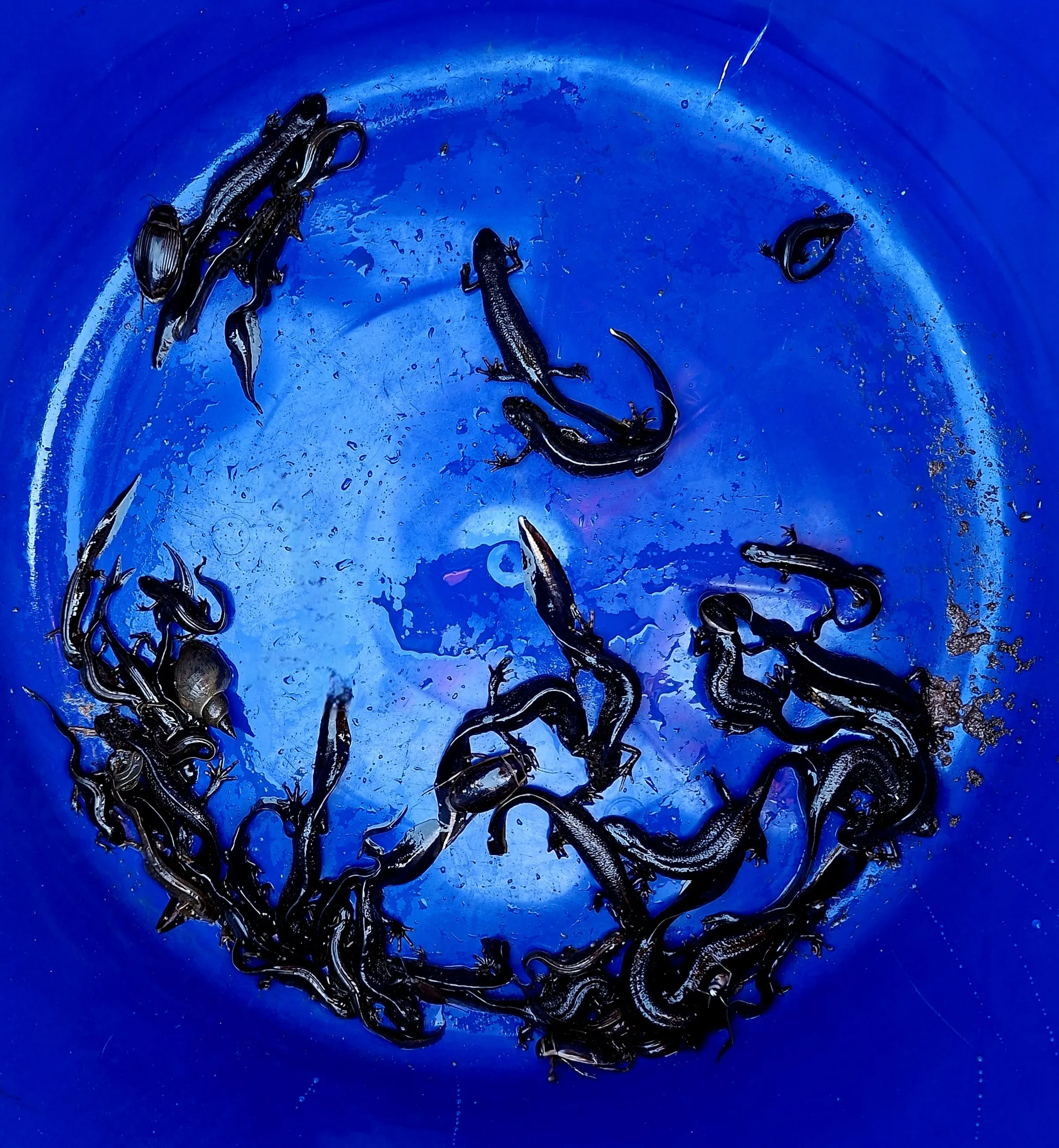
While trapping great crested newts from bunds prior to a restoration campaign, it occurred to me that there seemed to be a pattern to their movements that was not explained by weather conditions alone.
A review of published studies identified two that report increased activity prior to the new moon (Deeming 2008; Grant et al. 2009), and one that observed activity peaks during both the full and new moons (Phillips 2020). Full and new moons occur once each month, approximately a fortnight apart. I have two sites to trap this year, and it will be interesting to see whether the correlations reported in these studies are reflected in my own data.
Deeming D 2008. Capture of smooth newts (Lissotriton vulgaris) and great crested newts (Triturus cristatus) correlates with the lunar cycle. The Herpetological Journal 18(3): 171-174
Grant R, Halliday T & Chadwick E 2012. Amphibians’ response to the lunar synodic cycle – a review of current knowledge, recommendations, and implications for conservation. Behavioural Ecology 24(1): 53-62
Phillips J 2020. Over the moon: the effect of the lunar cycle on three species of newt in the UK. MSc Thesis, University of Kent